
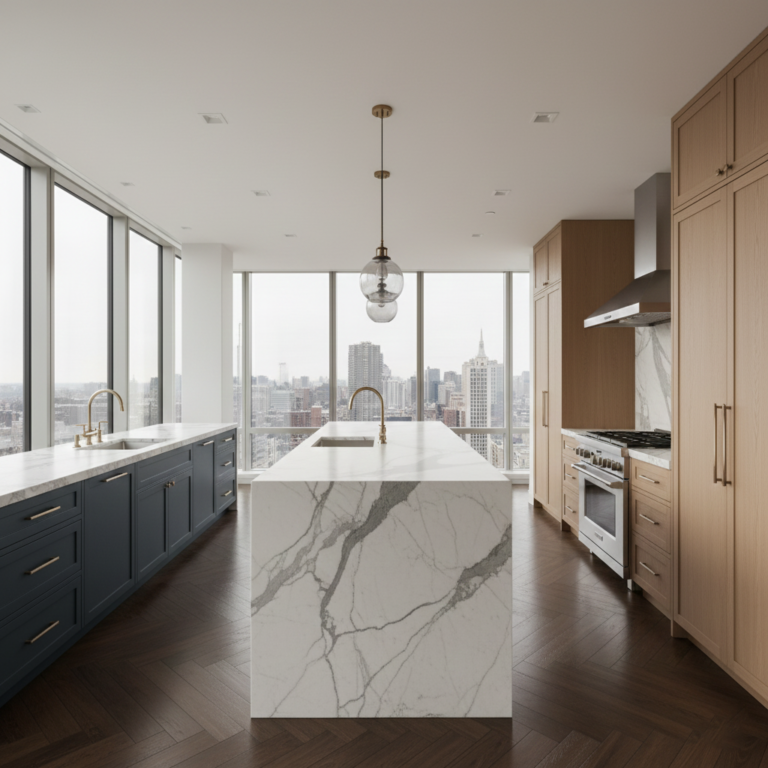
If you love marble countertops because of their natural beauty, you are already halfway to understanding how they age and the impact of marble countertop aging. Marble is a natural stone that softens, settles, and builds character over time. At Tops Countertops, we see this process daily with polished marble, honed marble, Carrara, and Danby slabs. With age, marble shows:
- A gentle patina
- Light etching in busy areas
- A softened sheen compared to day one
This is what makes marble unique, not flawed.
How Marble Changes in Real Homes: What Aging Actually Looks Like
The Process of Marble Countertop Aging
Marble does not stay frozen in time. Once it becomes part of a kitchen or bathroom, daily use begins shaping the surface. Some homeowners see these changes as natural beauty. Others see imperfections. The truth is that marble reacts to life around it.
What the Patina Process Looks Like Over Time
Patina is the softening of the surface as marble adjusts to daily use. It is a natural change that develops even on well-cared-for countertops. The polished surface slowly relaxes, and the stone begins to show signs of subtle wear that blend into an overall aged marble look.
Patina becomes more noticeable in areas like:
- The section near the sink where water dries regularly
- The baking or prep zone where hands and tools land repeatedly
- High traffic corners that get brushed against during daily movement
These changes are not damage. They are part of the patina process that gives marble its depth and history.
Why Marble Etches From Everyday Life
Etching happens when acidic liquids react with the calcium carbonate inside the stone. Lemon juice, vinegar, wine, and even certain cleaners can leave a dull spot called an etch mark. It is not a stain and does not mean the stone absorbed anything. Etching is simply the surface reacting.
A common scenario looks like this. Someone sets down a glass during food prep. A tiny ring forms overnight. The stone did not stain. It etched. No sealer would have prevented that.
What Causes Stains in Marble?
Stains occur when a spill sits long enough to seep into the porous surface. Oils, sauces, and deeply pigmented liquids are the ones that leave discoloration if they are not wiped up quickly. A sealer slows this absorption but does not make marble stain-proof.
Useful stain solutions depend on the source:
- A poultice can draw out oil-based discoloration
- Peroxide can help with organic stains like coffee
- Resealing after treatment helps slow future absorption
These approaches go beyond the basic “wipe spills quickly” advice and give homeowners clear next steps.
How Scratches and Wear Form Naturally
Marble sits lower on the Mohs scale of hardness than granite or quartz, which is why it scratches more easily. Daily use leaves small marks that usually blend into the patina. These micro-scratches become part of the marble’s character and are rarely considered damage.
Deeper scratches are different. They come from dragging metal items, sliding heavy pots, or dropping sharp tools. These cuts stand out from normal wear and may need professional honing or polishing to repair.
How Finish Impacts Aging (Honed vs Polished)
Finish plays a major role in how marble ages. Polished marble highlights etching and dull spots because the shine exaggerates any surface change. Honed marble blends imperfections into a smooth, matte finish, which makes aging feel intentional rather than accidental.
Honed marble often appeals to homeowners who:
- Cook frequently and want a forgiving finish
- Prefer a matte surface that hides subtle wear
- Embrace the natural patina that comes with daily activity
This guidance helps homeowners choose a finish based on lifestyle, not just looks.
Why Some Homeowners Love Marble More As It Ages
Some people choose marble precisely because of how it ages. They love the way veining softens, how the patina builds, and how the surface develops personality over time. These homeowners often tell us at the showroom that they want marble because a brand-new, untouched counter feels too sterile. They prefer something natural and expressive.
The lived-in look is exactly what gives marble its charm. It changes in ways quartz and other manmade materials never will, and for many homeowners, that evolution is the reason they love marble.
How to Choose and Care for Marble Based on How It Ages
Once a homeowner understands how marble changes, the next step is choosing a stone and a finish that match their lifestyle. Not everyone wants the same level of patina, softness, or character.
How to Choose Marble You Will Still Love Years From Now
Choosing marble has less to do with trends and more to do with how you live. Carrara, Danby, and other soft marbles each age with their own personality. Carrara tends to develop a softer patina, while Danby stays a little brighter and tighter in appearance.
Homeowners who enjoy natural variation usually appreciate this evolution. Homeowners who prefer a consistent look often gravitate toward quartzite or quartz instead. The goal is to choose a marble countertop that aligns with how much character you want it to show years from now.
What Sealing Actually Does (And Doesn’t Do)
Sealing marble helps slow down absorption, which makes stains easier to avoid. It does not protect against surface reactions such as dull spots or patina development. A good sealer simply gives you more time to wipe spills before they settle.
Most marbles benefit from resealing every so often, depending on use. A simple test is to place a few drops of water on the counter. If the water darkens the stone within a few minutes, it is time for a fresh coat.
Daily Habits That Help Marble Age Gracefully
These habits keep marble looking intentional as it develops patina over the years. They do not prevent aging. They guide it.
Habits that protect marble:
- Wipe spills quickly, especially acidic liquids
- Use a cutting board during food prep
- Avoid placing hot pans directly on the surface
- Clean with dish soap and warm water
These small decisions help your marble age with character rather than neglect.
How to Fix or Refresh Marble When Needed
Marble can be refreshed when you want to soften signs of use. Polishing can restore shine to polished marble if it begins to look tired. Honing can minimize scratches and soften the appearance of etching for a more even finish.
When the surface changes more than you expected, a fabricator can refinish the stone so it looks balanced again. Marble’s ability to be revived is one of the reasons it stands the test of time.
When Marble Might Not Be the Best Fit
Not every homeowner enjoys how marble evolves. It helps to be honest about expectations before choosing a slab.
Marble may not be the right fit for:
- Perfectionists who want a surface to stay perfectly pristine
- Cooks who work with a lot of acidic ingredients
- Homeowners who prefer a zero-maintenance countertop
In these cases, quartz, granite, or quartzite often provides a more predictable experience without sacrificing beauty.
Want Help Choosing a Marble That Ages Gracefully in Your Home?
Choosing marble countertops is a highly personal decision that requires balancing natural beauty with lifestyle. At Tops Countertops, we understand that selecting a natural stone means choosing how you want your kitchen to evolve. We are your trusted, veteran-owned fabricator ready to guide you.
Skip the impersonal experience of big-box stores and partner with the local experts who deliver superior quality and service.
FAQs: Quick, Clear Answers About How Marble Ages
Does marble stain easily over time?
Marble can stain if spills sit too long because it is a porous natural stone. Sealing helps slow down absorption, but does not make the surface stain-proof. Wiping spills quickly keeps discoloration from setting in, especially with oils or pigmented liquids.
Why does marble etch when exposed to acidic substances?
Marble etches because acids react with the calcium carbonate in the stone. This reaction leaves a dull spot on the surface. It is not a stain and does not mean the marble absorbed anything. Even sealed marble can etch if acidic liquids are left on it.
Can I keep marble looking polished for years?
Yes, but it requires occasional attention. Polished marble shows dull spots more easily, so you may need periodic polishing to restore shine. Homeowners who prefer low upkeep often choose a honed finish because it hides wear more naturally.
Does honed marble age better than polished marble?
Many homeowners think so. A honed finish softens the look of etching and daily wear, which makes aging feel intentional. Polished marble reflects more light, so any mark stands out more. The best finish depends on how much patina you want to see.
How often should I seal marble countertops?
Most marble benefits from resealing every so often, depending on use. A simple test is to place a few drops of water on the surface. If the stone darkens within a few minutes, it is time to reseal. Sealing protects against stains, not etching.
Can old marble be refinished to look new again?
Yes. Marble can often be revived with honing or polishing. A fabricator can remove scratches, soften etching, and restore a more even finish. This ability to refresh the surface is one of the reasons marble lasts for decades.
Will marble scratch more than granite or quartz?
Marble scratches more easily because it is softer than granite or quartz. Most scratches are minor and blend into the overall patina. Deeper marks can be removed through professional refinishing if needed.
Is marble a good choice for kitchen countertops if I cook often?
It depends on your comfort with natural wear. If you enjoy the look of patina and do not mind occasional etching, marble is an excellent choice. If you want a surface that stays perfectly consistent, quartzite or quartz may be a better match for your cooking habits.